
Hover over James WattTap the portrait
Watts Else? Paris · energy calculation software
Energy,calculatedend to end.
We are building the software that calculates building energy, the book that explains every line, and the atlas of those who produce it. One codebase, and figures that tell you where they come from.
French grid ·
68.5 GWgenerated
Demand
54.6 GW
Atlas
13,786 players
Book
94chapters
Construit avec
- ClaudeWatts Else? fait partie du programme startups d’Anthropic
- ScalewayInfrastructure, hébergée en France
- Mistral AIModèles pour besoins spécifiques
Behind every radiator, every heat pump, every power plant, there is a calculation. It is often copied, rarely shown, almost never checkable. We are writing the one you can check, line by line.
Watts Else? · after James Watt, 1736-1819 · the watt bears his name
A change of scaleis a change of calculation.
-
01 Home
An average home in France
- Energy
- 12,000 kWh/yrall energy sources · calculated from SDES-CEREN 2024
- Floor area
- 92 m²average floor area · calculated from SDES-CEREN 2024
- CO₂
- 1.2 t CO₂e/yrdirect emissions · calculated from SDES-Citepa 2024
-
02 Building
A building connected to a heat network ≈ 65 homes
- Energy
- 584,000 kWh/yrheat delivered · 2023 · FEDENE
- Floor area
- 5,900 m²equivalent floor area · calculated from FEDENE 2023 and SDES 2024
- CO₂
- 66 t CO₂e/yrlife-cycle emissions · calculated from FEDENE 2023
-
03 Neighbourhood
A neighbourhood of 2,000 residents ≈ 950 homes
- Energy
- 11,400,000 kWh/yrall energy sources · calculated from INSEE 2022 and SDES-CEREN 2024
- Floor area
- 87,000 m²calculated from INSEE 2022 and SDES-CEREN 2024
- CO₂
- 1,100 t CO₂e/yrdirect emissions · calculated from INSEE 2022 and SDES-Citepa 2024
-
04 Heat network
An average heat network in France ≈ 3,000 homes
- Energy
- 27,400,000 kWh/yrheat delivered · calculated from SDES 2025
- Floor area
- 280,000 m²equivalent floor area · calculated from FEDENE and SDES 2024
- CO₂
- 3,000 t CO₂e/yrlife-cycle emissions · calculated from FEDENE 2025
Sources and method
- Home: 368.4 TWh used by homes in 2024, all energy sources except ambient heat captured by heat pumps, 2,810 million m² and 35.5 million tonnes CO₂e of direct emissions, divided by 30.69 million main residences. SDES, consommation d’énergie par usage du résidentiel · SDES, logement et environnement, état des connaissances 2025
- Building: 584 MWh delivered on average in 2023 to each building connected to a heat network, with an average life-cycle CO₂ content of 0.113 kg/kWh, and 9 MWh a year of heat per average home. FEDENE, enquête annuelle des réseaux de chaleur 2024
- Neighbourhood: 2,000 residents, the low end of a residential IRIS area (usually 1,800 to 5,000 residents), i.e. 952 homes at 2.1 people per household, multiplied by the average home's figures. INSEE, types d’IRIS · INSEE, ménages selon la taille
- Heat network: 29.4 TWh delivered in 2025 by 1,073 networks, with an average CO₂ content of 0.108 kg/kWh in 2025. SDES, les réseaux de chaleur et de froid en 2025 · FEDENE, synthèse de l’enquête 2026
- Method: for the building and the network, equivalent homes = heat delivered ÷ 9 MWh/yr, the heat of an average home used by FEDENE after ADEME; equivalent floor area = equivalent homes × 92 m². These are orders of magnitude. Home consumption covers all ordinary dwellings but is divided by main residences only, which slightly overstates the average home. CO₂ for the home and the neighbourhood counts only direct emissions from fuels; for the building and the network it covers the life cycle of the heat delivered.
The result,and every step to it.
Every assumption is visible, every value has its source. Change the insulation thickness: the wall, the heat flow and the load are recalculated before your eyes.
−93% vs. the bare wallbare wall: 8,435 W
The book thatexplainsevery line.
HVAC engineering course: from moist air to the carbon footprint of an installation, 94 chapters in 12 parts. The wall from the calculation report is explained in chapter 17.
- PPhysics for HVAC engineering
- FAir handling
- AFundamentals
- GRefrigeration and heat pumps
- BClimate, comfort and buildings
- HApplications
- CLoads
- IControls and energy
- DHydronics and heating
- JOperation and improvement (good practice)
- EAir distribution
- KPhotovoltaics
From “Moist air” to “The carbon footprint of an installation”: 94 chapters in 12 parts.Read the book →

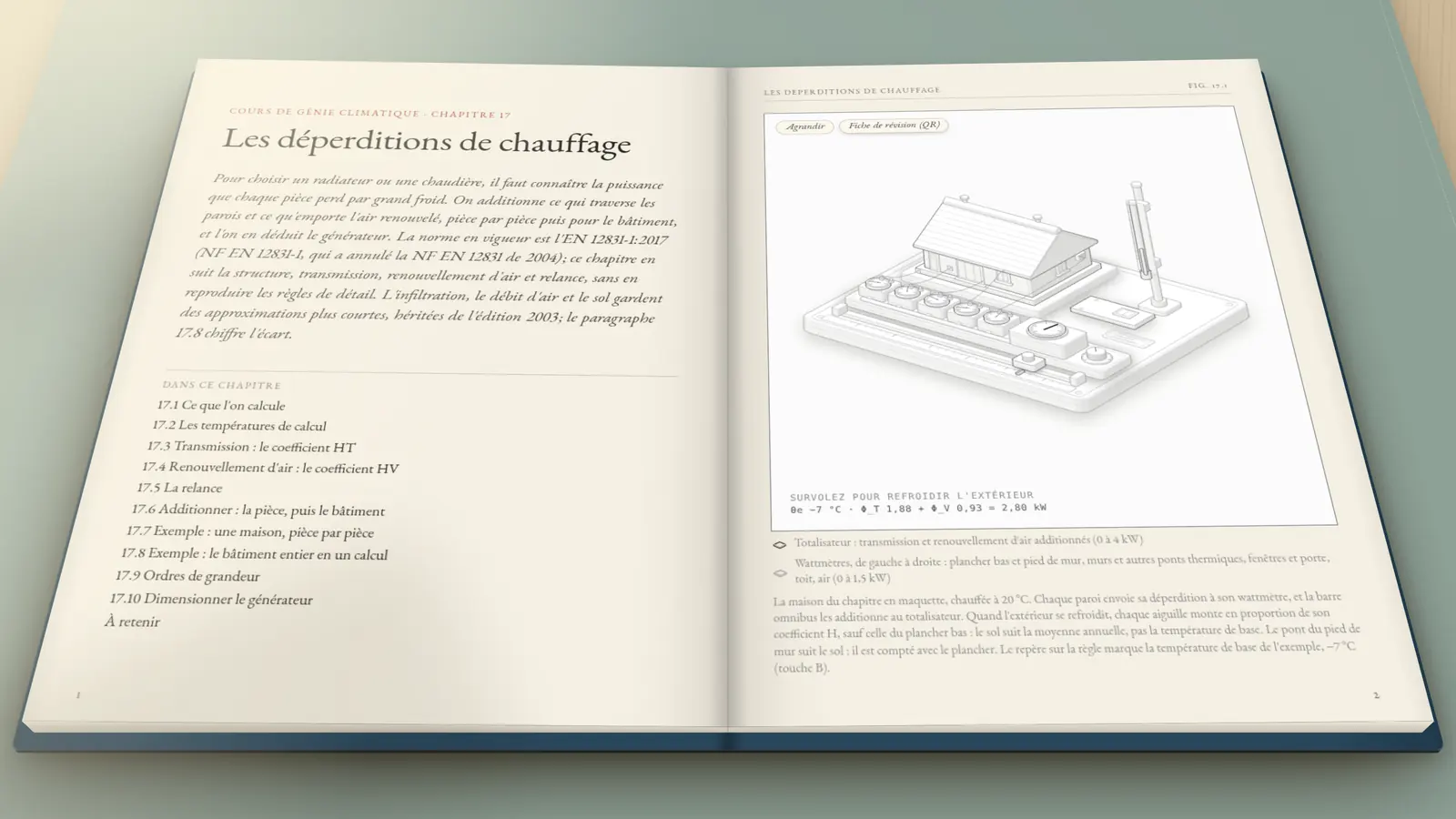
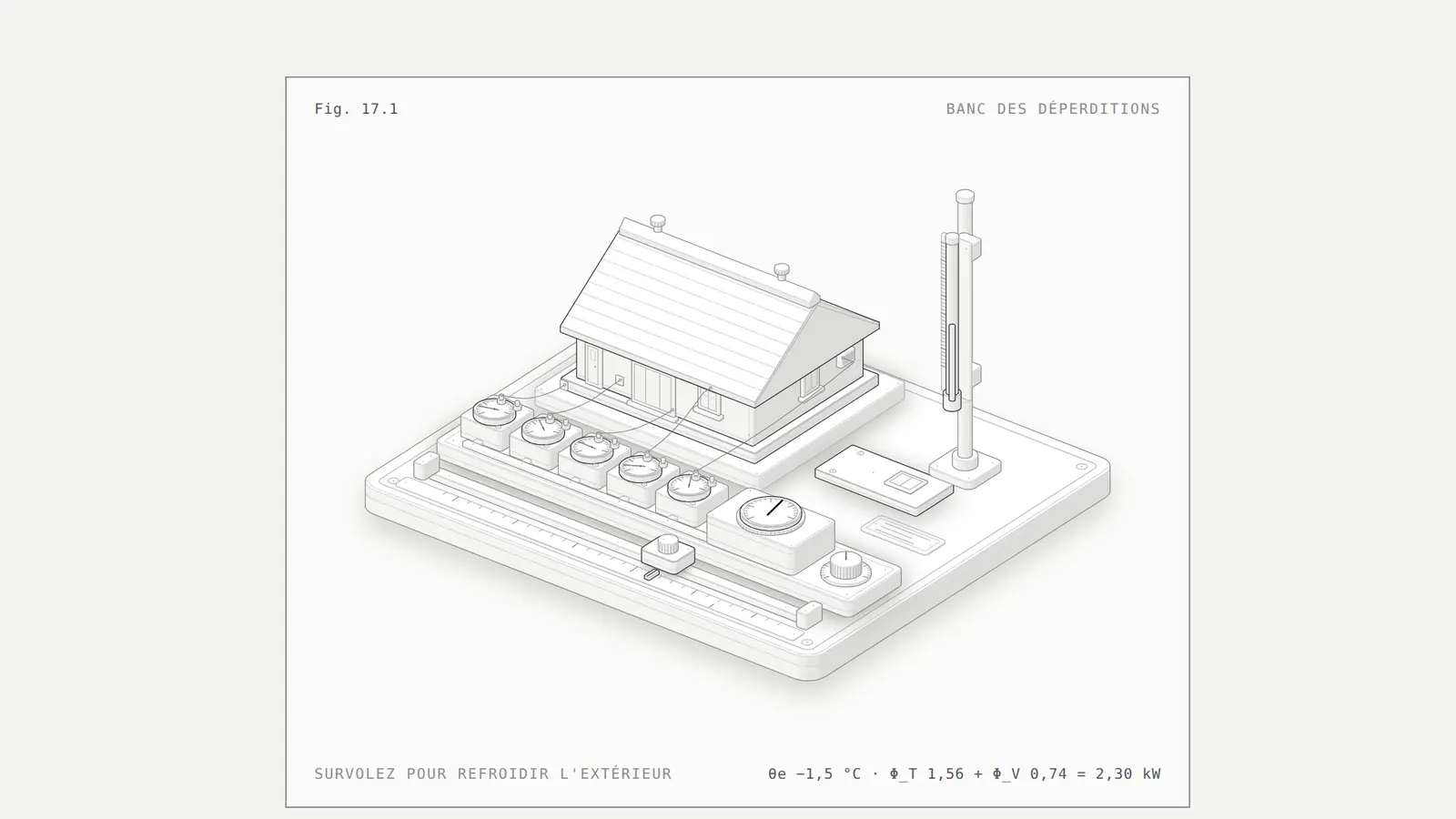
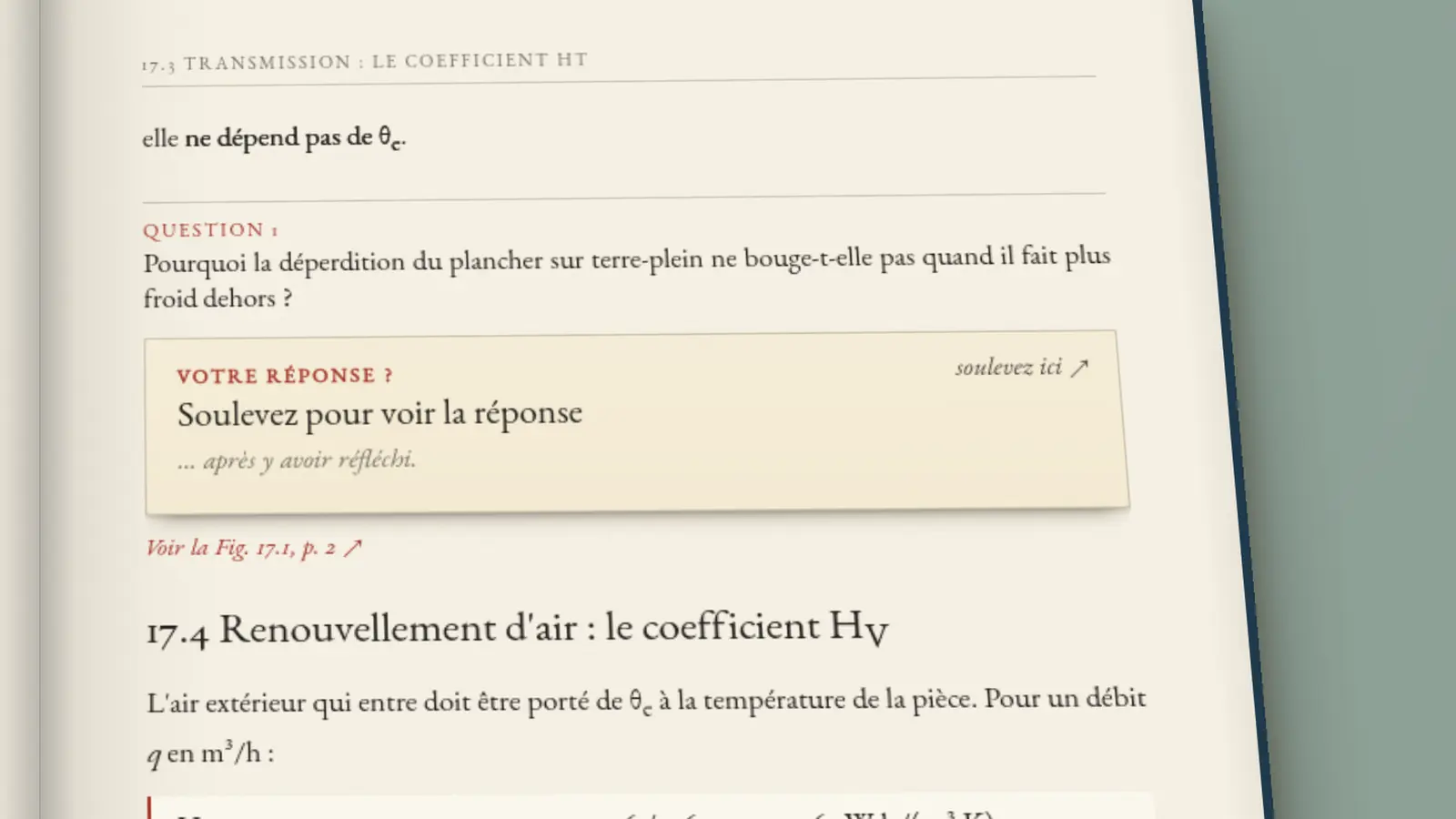
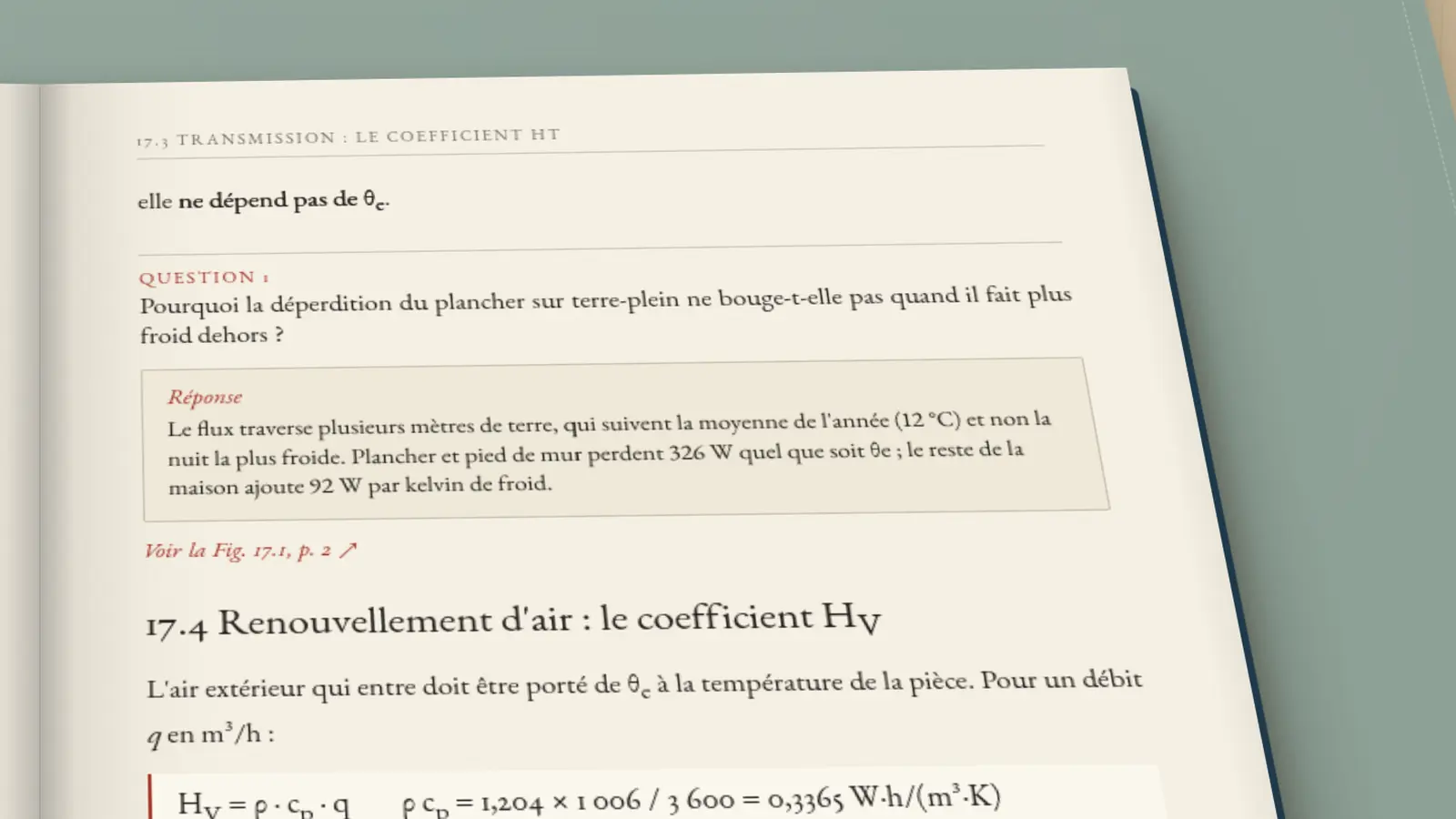

Fig. 3 · chapter 17, pp. 1–2Design heat losses
Every figure in the course comes from the same code as the software. The course grows batch by batch: drafted by our agents, tested against the software and reviewed before import.
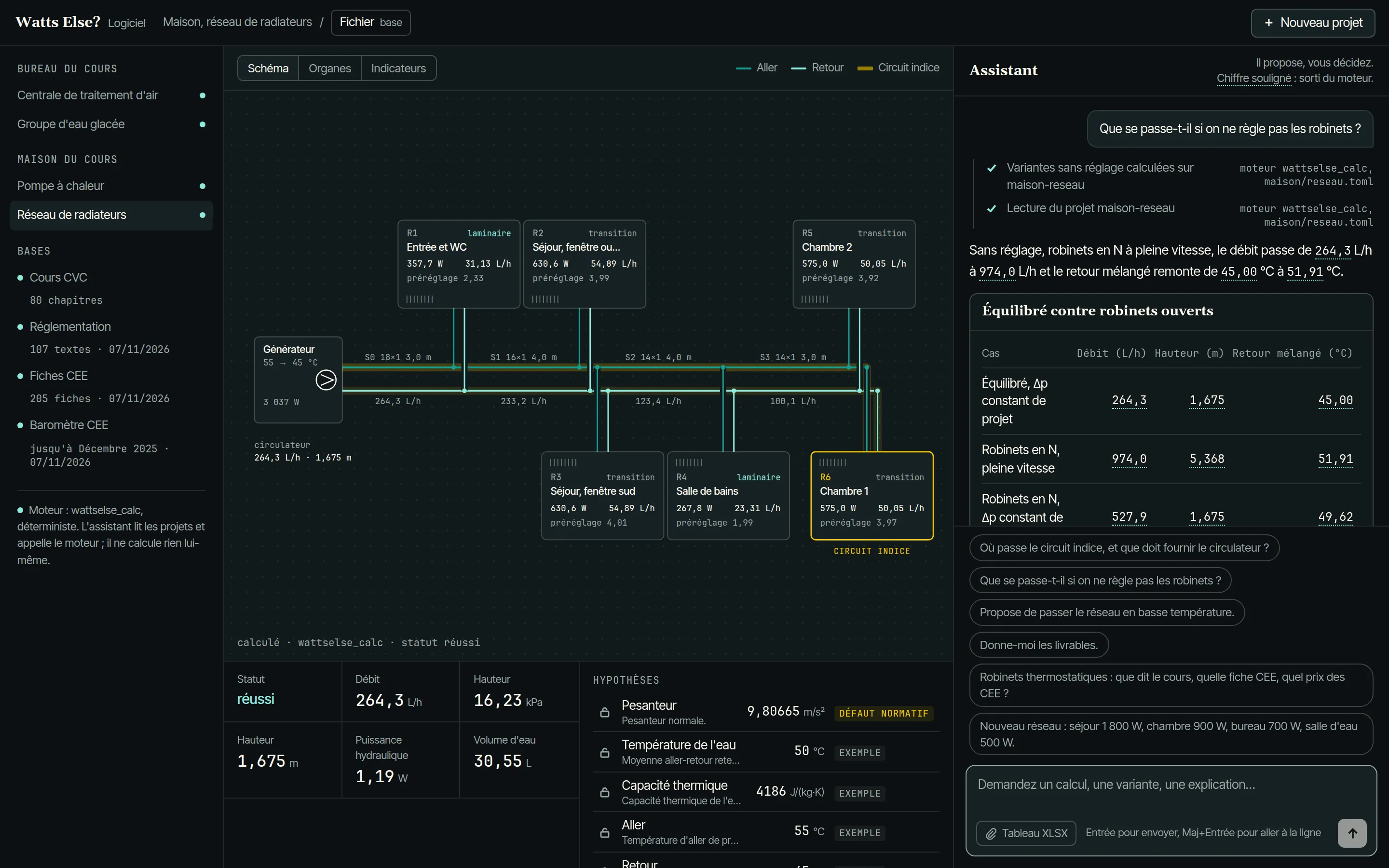
The course house network, calculated by the engineSoftware screenshot
Gas or heat pump:the figures side by side.
Gas boiler
- Running cost
- €2,190 a yeargas and standing charge · December 2026 reference price · CRE
- Emissions
- 2.3 t CO₂e/yr2022 natural gas factor · ADEME Base Carbone
- Required servicing
- every yearDecree 2009-649
Cheaper to run, lower emissions
Air-to-water heat pump
- Running cost
- €640 a yearelectricity at the regulated tariff · August 2026 · EDF
- Emissions
- 0.37 t CO₂e/yr2023 electricity factor for heating · ADEME Base Carbone
- Required servicing
- every 2 yearsDecree 2020-912
Assumptions and sources
- House: 113 m², the average house size; 86 kWh NCV of gas per m² for heating, the 2024 average for gas-heated homes, i.e. 10,815 kWh GCV a year. Same caveat as above: divided by main residences, this average is slightly overstated. SDES, consommation d’énergie par usage du résidentiel
- Boiler: 86% seasonal efficiency, the EU legal minimum, i.e. 9,300 kWh of useful heat. règlement (UE) 813/2013
- Heat pump: an average performance coefficient of 2.9 measured on installed air-to-water heat pumps, i.e. 3,207 kWh of electricity a year. ADEME, avis sur les performances réelles des pompes à chaleur, 2025
- Prices: gas at €0.16896/kWh incl. tax plus a €360.79/yr standing charge (December 2026 reference price); electricity at €0.2001/kWh incl. tax (Tarif Bleu, Base option, 6 kVA, August 2026). The running cost leaves out purchase, installation and the electricity standing charge the home already pays; a heat pump may need a higher-rated supply. CRE, prix repère du gaz · EDF, grille du tarif Bleu
- Emissions: natural gas 0.239 kg CO₂e/kWh NCV; electricity for heating 0.115 kg CO₂e/kWh with the seasonal method, the more cautious one (0.0645 with the average method). ADEME, Base Carbone
- Servicing: gas boiler every year; heat pump of 4 to 70 kW at least every two years. décret 2009-649 · décret 2020-912 · ministère de la Transition écologique

Who makes energy,where, and with what.
- WhoDevelopers, operators, engineering firms, manufacturers.
- WhatEvery project with its technology, capacity and status.
- ProofEvery value linked to its source, checkable in one click.
Energy news,read and drawn.
Radar →
Energy news, read for you: sources sorted and dated.
- Nov 18 · Révolution Énergétique Le réseau électrique français aborde l’hiver sans craintes, même en cas de vague de froid
- Nov 18 · Hellowatt Blog Passoires thermiques : vers la fin de l’interdiction de louer ?
- Nov 18 · GreenUnivers Budget : le Sénat fait un premier pas vers la suppression de la révision du « S21 »
Comics →
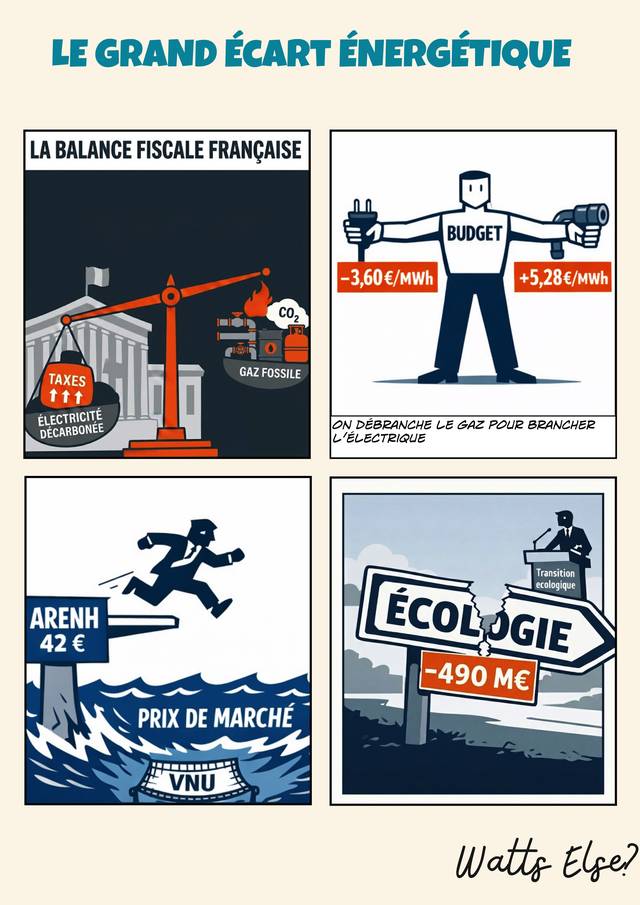
Every week, one energy topic told in a single comic page.
Database →
Regulations, incentives and technologies, all searchable in one place.